Human Patient Simulator (HPS)
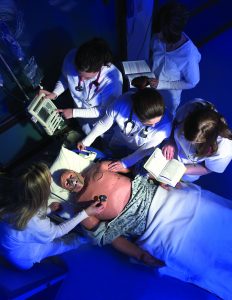
Physiology you can count on.
HPS is a mannequin so real it supports the use of anesthesia and medical gases. Built for anesthesia, respiratory, and critical care, the HPS has true oxygen and CO2 gas exchange to exhibit the ultimate sophistication in validated physiology.
The HPS connects to a real patient monitor and supports mechanical ventilation to deliver more realism for immersive learning. And, if you need a broad range of features without the anesthesia capability CAE Healthcare offers the Health Science HPS, which accommodates nursing, respiratory therapy, and emergency medicine. Each HPS model is packaged with 50 Simulated Clinical Experiences so you can spend less time writing scenarios and more time integrating simulation into your curriculum.
Key Features
Anesthesia and Scavenging
- Ability to administer anesthetic agents and medical gases
- Lungs consume oxygen and produce carbon dioxide
- Uptake and distribution of nitrous oxide and volatile anesthetics
- Direct gas exchange within the lungs
- Mechanical ventilation fully supported with automatic responses to CPAP, PSV, PEEP, SIMV, assist control modes and weaning protocols
- Simulator will flow trigger or pressure trigger a ventilator to cycle
- Simulator can be configured to fight the ventilator
- Expired carbon dioxide automatically based on patient condition and interventions
- Thumb twitch with standard Peripheral Nerve Stimulator based on neuromuscular agent response Neurological Reactive pupils and blinking eyes
- Automatic changes based on inadequate respiratory and cardiovascular conditions
- Convulsions Airway Head tilt/chin lift
- Tongue swelling, pharyngeal obstruction, laryngospasm and bronchospasm
- Intubation: orotracheal, nasotracheal, ET tubes, retrograde, fiber optic, right mainstem
- Gastric distention with esophageal intubation
- Supports ET tube and other airway adjunct placement
- Bag-valve-mask ventilation
- Surgical cricothyrotomy
- Needle cricothyrotomy
- Variable airway resistance and compliance
- Bilateral and unilateral bronchial occlusion
- Supports real capnography Breathing Bilateral and unilateral chest rise and fall
- Measures the presence or absence of carbon dioxide exhalation
- Spontaneous breathing
- Bilateral chest tube insertion with fluid output and automatic resolution of physiology
- Bilateral needle decompression with automatic resolution of physiology
- Variable lung and chest compliance
- Pulse oximetry correlates dynamically to ventilation, oxygenation and perfusion Cardiac
Circulation
- Blood pressure measurement (left arm) by auscultation and palpation
- Bilateral carotid, brachial, radial, femoral, popliteal, and dorsalis pedis pulses
Urological
- Urine output • Urinary catherization • Interchangeable genitalia
Vascular Access
- IV cannulation with flashback supported in right arm including the brachial, cephalic, basilic, and antecubital veins
- Right deltoid intramuscular injection site available • Right jugular and left femoral IV lines support
infusions
CPR
- Correct hand placement, depth, and rate of compressions are reflected in physiological feedback rather than virtual target on instructor’s workstation
- Adequate chest compressions result in simulated circulation, cardiac output, central and peripheral blood pressures, carbon dioxide return
Pharmacology System
- Pharmacology system models automatically calculate the pharmacokinetics and pharmacodynamics for more than 50 intravenous and inhaled medications
- All patient responses to drugs are automatic, dose dependent and follow appropriate time course
Enhanced Drug Recognition System
- Features barcode technology and extensive drug library
- Standard syringes with barcoded labels including drug name and concentration
- Barcode technology automatically identifies the drug, concentration and dose requiring no interaction form the instructor
Trauma
- Diagnostic peritoneal lavage with fluid return
- Pericardiocentesis with fluid withdrawal linked to physiology
- Eyes, ears and mouth secretions Sounds Pre-recorded sounds and voices • Customized sounds and voices via the provided wireless microphone
- Defibrillation and cardioversion using live defibrillators, energy is automatically quantified and logged
- Pacing (use of hands-free pads), current is automatically quantified and logged
- 12-lead dynamic ECG display
- Simulated introduction and progressive insertion of pulmonary artery catheter displayed on patient monitor with appropriate waveforms Articulation Range of motion in the wrists, elbows, knees and ankles