BabySIM
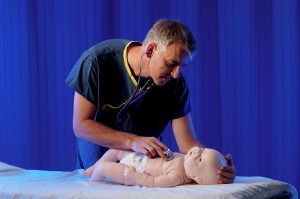
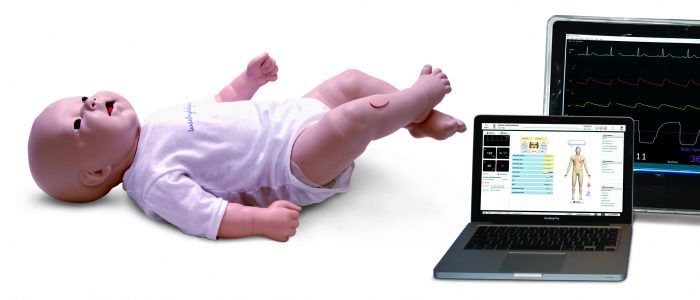
Infant patient simulator for life-saving critical care
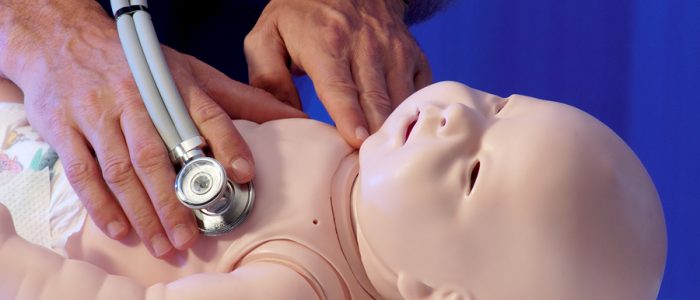
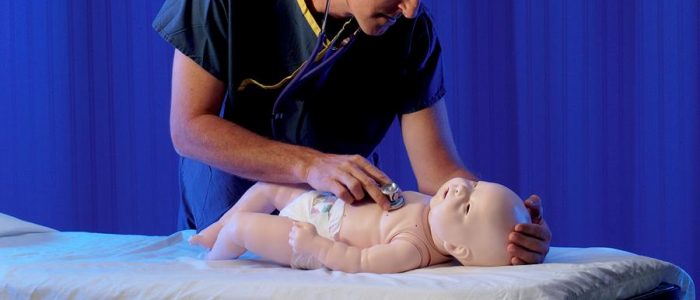
Driven by validated models of infant cardiovascular, pulmonary and neurological systems, BabySIM generates automatic responses to clinical interventions to prepare healthcare professionals for critical events relating to infants.
Key Features
Airway
• An anatomically realistic upper airway (oropharynx, nasopharynx and larynx), representing that of a three-to six-month-old patient.
• Intubation: orotracheal, nasotracheal, detection and response to right mainstem
• ET Tube, LMA and Combitube
• Bag-valve-mask ventilation
Breathing
• Measures the presence or absence of carbon dioxide exhalation synchronized with programmed lung sounds. Lung sounds include normal, biphasic, wheeze bronchovescular, crackles, prolongation, rhonchi, stridor, wheezing
• Seesaw breathing
• Bilateral and unilateral chest rise and fall
• Spontaneous breathing
• Unilateral chest tube insertion with fluid output
• Unilateral needle decompression detected
• Adequate chest compressions result in simulated circulation, cardiac output, central and peripheral blood pressures, and carbon dioxide return
Vascular Access
• IV access supported via left femoral catheter • IO site on anterior tibia of right leg
Neurological
• Software driven tri-state pupils and blinking eyes
• Automatic changes in blinking based on inadequate respiratory and cardiovascular conditions
• Palpable anterior fontanel
• Bulging fontanel capability to simulate increased intracranial pressure
Urological
• Urine output with and without catheter insertion • Instructor controlled rate and flow of urine output
• Interchangeable genitalia
Metabolic System
Metabolic features are physiologically modeled within the software and the results are made available on the instructor workstation
• ABG data displayed corresponds accurately and dynamically to the alveolar concentration of CO2 and O2
• Instructor driven simulated metabolic acidosis and alkalosis
Pharmacology System
• Pharmacology system models automatically and calculates the pharmacokinetics and pharmacodynamics for six intravenous and inhaled medications
• All patient responses to drugs are automatic, dose dependent and follow appropriate time course
Trauma
• Secretions from eyes, ears and mouth
Sounds
• Crying/cooing, breath, heart and bowel sounds • Pre-recorded sounds and an be looped for
continuous replay
• Customized sounds and voices via the provided wireless microphone and generates changes in pulmonary mechanics and gas exchange
• Esophageal intubation is fully supported with gastric distension
Circulation
• Blood pressure measurement by auscultation and palpation
• Bilateral brachial and femoral pulses
• Automatic pulse deficit occurs with decreased systolic blood pressure
• Bilateral brachial and femoral pulses are synchronized with ECG
• Pulses are independently controllable by the instructor for presence/ absence in the case of trauma to a specific extremity
Cardiac
Accurately simulates a wide variety of hemodynamic conditions and responses
• Live defibrillation, pacing, and cardioversion
• Defibrillation and cardioversion using live defibrillators, energy is automatically quantified and logged
• Pacing (use of hands-free pads), current is automatically quantified and logged
• 3-lead dynamic ECG display • Cardiac Sounds include:
– normal
– S3, S4, S3 and S4
– Early Systolic Murmur, Mid Systolic Murmur,
Late Systolic Murmur, Pan Systolic Murmur, Late Diastolic Murmur
CPR
• Correct hand placement, depth, and rate of compressions are reflected in physiological feedback rather than virtual target on instructor’s workstation